PP 90 01–ISO SPECIAL PERSONAL AUTO POLICY COVERAGE
FORM ANALYSIS
(November 2023)
|
Menu Part B - Medical
Payments Coverage Part C -
Uninsured Motorists Coverage Part D - Coverage
For Damage To Your Auto |
Insurance Services Office’s PP
90 01, Special Personal Auto Policy (SPAP) is designed for driving exposures
that are not generally accepted in either the standard or preferred auto
markets.
The SPAP is really quite similar
to the '18 edition of the Personal Auto Policy (PAP). This analysis is based on
the 09 18 edition and, where
applicable, will comment on significant differences between these forms.
Related Article: Special
Automobile Program Archive
Note: The archive
contains an analysis of the original, 07 06 Edition of the SPAP.
DEFINITIONS
This section defines the terms
that have special meaning in the SPAP. The following is a summary of the
defined terms:
A. The policy
uses the terms "you" and
"your" in reference to the "named insured" shown in the
declarations and the named insured's spouse (if the spouse lives in the
same household).
B. The terms "our," "us" and
"we" mean the company that issues and maintains the special personal
auto policy coverage.
C. The SPAP
considers any private passenger type of auto to be an owned vehicle if there is a written lease that covers a period of
six months or longer.
D. "Bodily injury"
refers to sickness, disease, or bodily harm. This definition even includes
death if it is a direct result of sickness, disease, or bodily harm.
|
Example: Kandace
is insured under a SPAP. She filed a claim after she received notice of a
lawsuit by a bicyclist she hit when she rushed through a stop sign. Two
months later, she receives an additional notice. It amended the request for
damages as the bicyclist later died of her injuries. |
|
Related Court Case:
“Bodily Injury from Physical Attack after Auto Accident Not Covered”
E.
"Business" means any trade, profession, or occupation. In other
words, it is any regular activity that generates income.
F. A "family member" is any person who
is a relative by blood or by marriage. Any persons who are adopted, wards or
foster children also qualify as "family members." However, no person
is a family member under this policy if they are not considered a current
resident of the same household as the named insured.
G.
"Occupying" refers to anyone who is in, upon, getting in, getting
on, getting out or getting off a vehicle.
|
Example: Jordi
is popular with the young children in her neighborhood. One young neighbor
runs over to see her as she returns home from work. Jordi parks and turns off
her car in her driveway. She hears a thud as she opens her door and is upset
to find that she has struck her young neighbor. The accident results in several deep facial cuts and a need for dental
surgery. This is a use of a vehicle that qualifies for coverage under the
SPAP since it falls within the meaning of “occupying.” |
|
Note: The SPAP definition doesn't mention whether
being under a vehicle is occupying it. Therefore, there could be some
confusion for certain accidents that could arise from odd situations. Consider
an accident that involves an insured who injures another while servicing the
undercarriage of a covered vehicle.
|
Example: Let’s
change the Jordi situation. One young neighbor runs over to see Jordi, who happens
to be under her car, making a repair. Jordi doesn’t notice her neighbor as
she slides out from under the car. She knocks her neighbor off her feet.
Again, the accident results in several deep facial
cuts and a need for dental surgery. This is a situation that would not qualify
for coverage under the SPAP. It falls outside the meaning of “occupying.” |
Related Court Case: Injured Party On Median Is Covered As Car's Occupant
H. "Property damage" means the
loss of use of, damage to or destruction of tangible
property.
Note: Inclusion
of loss of use in its “Property Damage” definition can involve a variety of
situations; the most common is theft of an insured vehicle. Otherwise, a
vehicle claim for loss of use will typically require that the loss be related
to some physical loss that is covered by the SPAP.
|
Example: An insured
sends a bill to his insurer for reimbursement. He had to rent a car for
nearly two weeks because his insured car was unavailable. His insurer denies his request. The car was unavailable because it was
in a shop, having customized equipment and painting added…it was never in an
accident. |
|
I. "Trailer" is any vehicle made
to be pulled by a private passenger auto, pickup or van. The definition
includes a farm wagon or farm implement while towed by a private passenger
auto, pickup or van.
Note: Farm implements and farm wagons qualify as trailers
ONLY for the time that they are being towed by an eligible vehicle (which
includes SUVs, crossovers, hybrids, etc.).
|
Example: An insured’s
neighbor falls and is injured while helping unload a boat trailer that’s
parked in an insured’s driveway – covered by SPAP. |
|
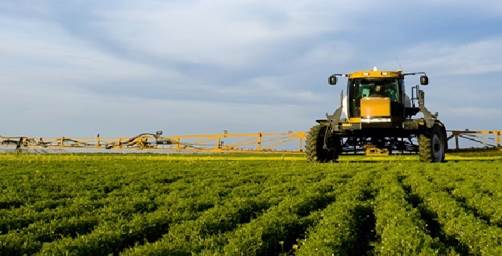
Example: An insured’s
neighbor is hurt when she falls off a fertilizer sprayer that’s parked on the
insured’s property - NOT covered. |
|
J. The definition
of “your covered auto” refers to:
·
Vehicles that are described in the SPAP
declarations
·
Autos that an insured acquires after the
beginning of the policy period that meet the requirement set out in the
definition of "newly acquired autos"
·
Trailers that are owned by any insured
·
Trailers or other vehicles that, while not owned
by an insured, are used as a substitute for a covered vehicle. However, the
substitution has to be due to the other vehicle being serviced, repaired, lost,
or destroyed.
Related Court Case:
Rental Vehicle Ineligible As A Covered Article
Following
are situations that would qualify as covered vehicles under an SPAP’s liability
coverage.
|
Example: A ‘21 Chrysler the insured borrowed from his
mother-in-law while his car is having its engine replaced |
|
Example: A ‘22 Honda mini-van that is a
“loaner” from the body shop which is replacing a faulty exhaust system on the
insured’s SUV |
If the operator caused an
accident during the above situations, it would qualify as a covered vehicle for
injury or damage caused to other parties.
K. “Newly acquired
auto”
1. Any private
passenger auto, pickup, or van that any insured obtains possession of during
the policy period (but after the policy period's inception date) qualifies as a
newly acquired auto. However, van and pickup eligibility is subject to a weight
and a use restriction. Pickups and vans are ineligible as covered autos if they
are used for business activities.
|
|
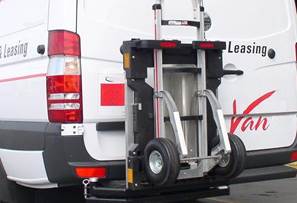
Example: Hannah had her sedan insured under a new SPAP. Two weeks
after she received the policy, she bought a used van. It was in a collision
less than a week later. Scenario 1: Hannah bought the
van to better handle her personal chores and transporting kids. This vehicle
is covered. Scenario 2: The van was purchased
and used in her start-up leasing company. The van is not eligible for
coverage. |
The policy makes an exception for incidental business use (as
part of a repair or maintenance business). It also allows covered auto status
for such vehicles that are used on a farm or ranch business. Though not
specifically referenced, SUVs are treated as private passenger autos and therefore
are not subject to the following weight restriction.
In order to be eligible, a pickup or van has to have a Gross
Vehicle Weight of no more than 10,000 lbs. The use of the term GVW Rating conforms
to what is used in the U.S. Government's vehicle classification manual.
However, even if an additional car, pickup or van clears the
vehicle type, vehicle use and date of acquisition hurdles, there are other
requirements. Item K.2. covers the issue of when to report an additional vehicle
to the insurance company. The timing of reporting the vehicle has a direct
impact upon coverage.
Note: The
reporting requirements depend upon the type of coverage involved and whether
the vehicle is a replacement.
2. Coverage for a “newly acquired auto” (but only when it is a
replacement) is provided along the basis discussed below. The policy states that,
if the insured fails to report a newly acquired auto within the applicable time
period requested by the policy, coverage will not begin until the date the late
request is made.
a. The liability coverage that applies to the vehicle being
replaced also applies to the replacement vehicle. The vehicle replacement
does not qualify for coverage after 14 days from the date of acquisition as an
owned vehicle unless the change is reported to the insurer. (09 18 change).
b. (1) If the replaced vehicle had Coverage for Damage to
Your Auto, the replacement vehicle has the same coverage but only for 14 days.
If a report is not provided to the insurance company within 14 days of its
acquisition the physical damage coverage ends on the replacement vehicle.
b. (2) If the replaced vehicle did not have Coverage for
Damage to Your Auto, the replacement vehicle does not have such coverage either.
The only way that the replacing vehicle secures protection under “Coverage for
Damage to Your Auto” is to specifically request it and the effective date of
physical damage coverage is that date of that request.
A newly acquired ADDITIONAL car qualifies for
coverage ONLY when it is reported to the insurer and that coverage begins upon
the date the vehicle is reported. THERE IS NO automatic coverage provided for
newly acquired autos that are in addition to the insured autos appearing on the
policy.
|
Example: Dill E. Dally’s SPAP covers a ’19 Mercury and has a
policy period of April 15, 2023 to October 15, 2023.
It has the following coverage limits |
|
|
Bodily Injury |
$100,000/$300,000 |
|
Property Damage |
$100,000 |
|
Medical Payments |
$10,000 |
|
Collision |
n/a |
|
Other Than Collision |
n/a |
|
Uninsured Motorist |
$25,000/$50,000 |
|
On September 3, 2023, Dill
buys a second vehicle, a ‘20 Ford Ranger. On September 16, Dill collides with
another car when he ignores a stop sign. He causes $22,000 in injuries to the
other driver, $4,500 in damages to the other driver’s car and $6,700 in
damages to his Ranger. Dill reports the accident to his insurance company on
September 18 and that is the same day that the insurance company learns of
the new car. Under these circumstances, there is no coverage for either the
vehicle or the damage or injuries caused by its use. It is an additional
vehicle. |
|
Like the PAP, the SPAP considers pickups and vans eligible
vehicles as long as their gross vehicle weight does not exceed 10,000 pounds
and they aren't used commercially. This auto policy is intended to provide
coverage for personal exposures. Where the language regarding pickups and vans
excludes business use of such vehicles (since commercial policies are
available), its approach is reasonable since it makes exceptions for incidental
business use and for farming or ranching. The exceptions recognize the fact
that such use is still consistent with what an insurer would consider a
personal loss exposure. Another qualifier for providing coverage to pickups or
vans is that no other coverage applies. Both owned and non-owned "trailers"
are defined as covered autos. Finally, if they're pulled by an eligible
vehicle, farm wagons and implements are also defined as "trailers,"
which are eligible for coverage.
L. “Transportation network platform”
This term refers to certain online transportation
services. Specifically, it means any such service that is accessed through a
mobile electronic device application or through a digital network. The service
must involve matching riders to drivers who are compensated for picking up and
transporting persons between agreed-upon locations. (09 18 addition)
This is a new, defined term, added to align with the
revisions made to the PAP in response to the exposure from ride-on-demand
services that have arisen and become common in recent years.
PART
A - LIABILITY COVERAGE
Insuring
Agreement
A. The SPAP protects
against loss involving both "bodily injury" and "property
damage" for which a covered person is legally obligated to pay because of
an auto accident. The agreement also obligates an
insurer to defend a claim or lawsuit. However, once the policy's limit of
liability has been exhausted, the insurer's obligation to continue paying to
legally defend an insured ends. Other circumstances, though, may also permit a
carrier to end its obligation concerning a loss.
An insurer can decide to settle
a claim when facing very high defense costs and this option has some merit. The
SPAP contains the potential of an unlimited defense obligation since it has no
specific monetary limit on the amount paid to defend a covered person. However,
the policy does allow a company to have some control over their financial duty
to protect a covered person in a given claim. Of course, a natural control against
an insurer’s unlimited obligation to defend an insured is that a company does not
have to provide a defense under ALL situations. An insurer doesn’t have to
defend any "bodily injury" or "property damage" loss that
isn't covered by the policy.
|
Example: Jim Hyperfast is sued after he
is involved in a rear-end collision. Jim sends his lawsuit paperwork to his
carrier, Drive-it-up Insurance. The company opens a claim file and begins a
legal defense. However, Drive-it-up soon ends its work on the loss when they
discover that Jim was chasing the other driver and admitted so to the police.
It turns out that the other driver was involved in an affair with Jim’s wife
and Jim intentionally rammed into the car. |
The SPAP is designed to pay for
accidents. Webster’s Encyclopedic Unabridged
Dictionary defines an accident as: 1. an undesirable or unfortunate
happening, unintentionally caused, and usually resulting in harm, injury, damage,
or loss. If an insurance policy protected an insured against ANY action, it would
no longer be insurance...and it could not be provided as a viable product.
B. Under Part A -
Liability Coverage, an insured is:
1. You are an
insured for the autos described under “your covered auto.” You are also an
insured for any other trailers and private passenger autos. In addition, you
are insured for other pickups and vans provided they weigh less than 10,000
pounds.
2. Any family member (as defined by the policy) but
only for autos described under “your covered auto.”
The SPAP also considers other persons and organizations to
be covered persons in certain circumstances.
3. Non-family
members who use an auto described under an SPAP are insureds while using such
vehicles. However, the protection granted is limited to the financial
responsibility limit of the state where the vehicle is principally operated. In
other words, only minimal limits would apply to such situations, regardless of
the actual limit that appears on a policy.
|
Example:
Sharilee’s Honda is insured under an SPAP. Her old college roommate has flown
into town for a week-long visit. Sharilee lets Wanda take her to and from
work so she can use the car during her stay. While Wanda is trying to find a restaurant
where she is supposed to meet another college friend for lunch, she runs a light
and hits another car. Since Wanda had permission to use Sharilee’s car, she
is covered as an insured but only for that state’s minimum limits. |
4. Other persons
or organizations are eligible for coverage when they have a legal liability
imposed upon them because of acts or omissions of a named insured, a resident
spouse or a "family member." This applies only when the acts or
omissions are related to the covered auto.
5. Other persons
or organizations are eligible for coverage when they have a legal liability
imposed upon them due to damage that results from acts or omissions of a named
insured or resident spouse. This applies only when the acts or omission are
related to a non-owned auto or trailer. The person or organization cannot own
or hire the particular non-owned vehicle. (In such instances, that party should
secure its own insurance coverage.)
|
|
Example: A member of your church asks
you to drive some children to a church picnic using a van provided by another
church member. On the way to the park (picnic site), the van hits an oil
slick on the road, slams into a couple of parked cars, and one of the
children suffers a broken leg. This policy provision allows the SPAP to
defend both you and the church as defendants in a claim involving the damages
caused by a vehicle that is not owned or hired by either party. |
Supplementary
Payments
This section advises the insured
of several payments that are made in addition to the limit of insurance.
1. One item is the cost of bail
bonds, but this coverage is limited to a total of $250. However, the bond has
to be connected with an accident. A bond that is due solely to a traffic
violation isn't covered.
2. The policy pays for the costs
of premiums on appeal bonds and attachment bonds, but only those involved in a
suit that the insurance company is defending.
3. The SPAP also pays for any
interest on judgments that have been entered. However, any payment obligation
ends if the policy's limit of insurance is reached.
4. The SPAP pays for loss of
earnings caused by hearings or trial attendance and other reasonable expenses
caused by an insurance company's request.
|
Example: Carrie’s insurer asks her to
travel to another part of the state. She has to be deposed as part of a
lawsuit a family filed against her because of a highway collision. Since she
had used up her vacation time, she won’t be paid for
missing a day’s work. Carrie’s insurer tells her that her policy will
reimburse her. |
Concerning loss of pay, the policy pays a maximum of $250 per day (09 18
change) because of lost earnings; this supplemental coverage does not
include loss of other sources of income. However, the loss of earnings limit
used to be a fraction of the current coverage. There is no other limitation
regarding loss of earnings, so the limit could be paid for one or 100
occurrences of lost pay.
5. Finally, under Supplementary
Payments, the policy will pay any reasonable expenses that are due to activity
requested of an insured by the insurer.
|
Example: Carrie, in the above situation,
has to stay over for additional testimony. Her insurer tells her that she will
be reimbursed for the hotel and the cost of her meals. |
Exclusions
This coverage part's exclusions
fall under categories A, having to do with "insureds," and B, which
concerns vehicle ownership, maintenance, and use.
Category A.
Exclusions
There are a number of situations
that fail to qualify for coverage under the SPAP, such as the following:
1. The Special
Personal Auto Policy doesn't provide liability protection to insureds that intentionally
injure other persons or property. Because this point sometimes causes
confusion, it's important to examine what is meant by intent.
|
Example: Nicole is fed up with her neighbors. Their teen and his
friends often loiter in front of her house and lean against her sports car,
though she’s yelled at them about this. One day, after shooing them away, she
starts her car and decides to throw a scare into the kids. She steers the car
toward them, but then her hand slips on the steering wheel and she hits the
group, causing a variety of injuries. When Nicole’s insurer denies coverage
for the subsequent lawsuits, Nicole argues that she meant to scare the kids,
not hit them. |
If you think the fact that something is foreseeable should
determine intent, how about the following?
|
Example: |
|
Related Court Case: Unlicensed Driver "Borrows"
Grandparents' Van
2. The SPAP
excludes coverage for property damage to property that any insured owns or
transports.
3. Any property
that an insured has rented, uses or is caring for is also without protection if
damaged or destroyed. The good news is that an exception is made for an
insured’s home or garage.
|
|
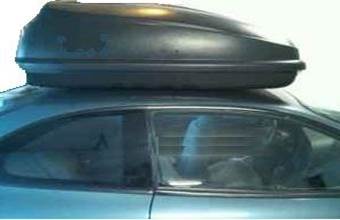
Example: Henry is unloading his car
after returning from a two-week vacation. While he is removing an expensive roof-top
carrier, he loses his grip and the carrier falls onto his concrete driveway.
The carrier cracks along its entire length and is ruined. He borrowed the
carrier from his neighbor. The SPAP will not cover this loss. |
4. This exclusion
removes consideration for coverage of bodily injury to any person who is hurt
while working for an insured. However, an exception is made for domestic
employees who aren’t covered AND aren’t required to be covered by workers compensation.
5.
If an insured is using a covered auto to make money by transporting either
people or property, that insured has just made the vehicle ineligible.
This
exclusion has been revised to make coverage intent clearer. It now makes reference to the coverage ineligibility when any
insured driver is actively using any vehicle in conjunction with a
transportation network platform. Active use means providing such use as a
driver. The exclusion applies both while seeking passenger contacts and during transporting
passengers. (09 18 change)
The exclusion
also has a couple of exceptions.
a. Coverage still applies if the situation is a typical carpool (where the
insured gets gas and maintenance money from his riders).
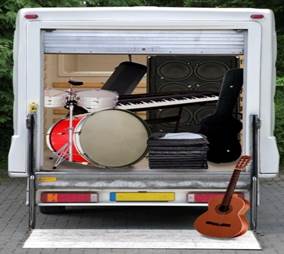
|
Example: Marni finally got her own
car, her mom’s old minivan. Odd for a teenager, she is actually happy to have
the hand-me-down vehicle. Marni is the lead singer and drummer for “The
Blonde Squad” and the van is perfect for hauling her bandmates and their
equipment to practices and gigs. At the moment, there’s no problem since the
band isn’t being paid. However, problems will arise once “Blonde” starts
getting paid to play. At that point, a loss while going to or from a paid gig
may not be eligible for coverage. |
|
b.
An additional exception is referenced, allowing coverage for a vehicle during
its use in charity and volunteer situations. Protection extends to instances of
both ownership and operation during such instances. (09 18 change)
6.
No coverage is provided if the accident happens while selling, fixing, caring
for, keeping, or parking automobiles that are operated on public roads,
including road testing or vehicle delivery. However, you don’t have to worry
about this exclusion if the accident involves your covered car that’s being
handled by “you” or any “family member,” partner, agent, or employees of any of
these insured parties.
Related Court Case: “Mechanic's
Driving Of Customer's Car Held Excluded”
7.
This exclusion takes coverage away from any insured while involved in any
“business” that is NOT described in exclusion 6, unless the business is
ranching or farming. HOWEVER, the exclusion is voided if it involves a private passenger
auto, van, or pickup that either is owned or is a temporary substitute for a
covered auto that is inoperable because it is broken down, lost, destroyed, or
being repaired or serviced. Further, any trailer used with an owned auto, van
or pickup, or a temporary substitute, is covered.
|
|
Example: |
8.
Don’t look for coverage under the SPAP unless you’re operating a covered car in
the belief that you have an insured’s permission.
Note: This standard is subjective
and means that evaluation of a loss must include consideration of the
operator’s thoughts on whether the car was operated with an insured’s
permission.
|
Example: A friend of an insured borrows
a car a second time during a weekend that the insured is away from home. The
insured gave permission for the first use, but not the second. However, since
the friend can’t get in touch with the insured and it was okay to use the car
before, she assumes that a second use is also permitted. If the friend causes
an accident while using the borrowed car, her belief that she had permission
should support coverage being extended to cover the loss. |
However, a significant change in
circumstances can render a different evaluation.
|
Example: Again, let’s use the
situation of an insured’s friend who borrows a car twice while the insured
was away for a weekend. Again, the friend received permission for the first
use, which was to go on a downtown shopping trip. All of this was with the
insured’s knowledge and permission. The second use is without the insured’s knowledge
or permission but, as it was in the original situation, the friend can’t get
in touch with the insured and as it was okay to use the car before, she assumes
that a second use is fine. However, in this scenario, rather than using the
insured’s SUV for personal use, the friend uses it to make deliveries for
persons who bought furniture from her Second-hand Shop. If the friend causes
an accident while using the borrowed car, her belief that she had permission
might be challenged by an insurer. While the friend’s assumption that a
second personal use might be okay, this assumption might not hold when
the second use is for business. It is possible that coverage for this
situation could be denied. |
Related Court Case: Non-Permissive
Use, Ineligible for Coverage
This exclusion DOES NOT apply to the use
of a covered auto that is owned by an insured and being operated by a “family
member.”
|
Example: Junior storms out of the
house and uses his set of keys to the pickup immediately after his mom just said
that he could not use the truck for a date - this is still a covered
situation. |
|
Example: An insured borrows his neighbor’s
dual axle pickup to help his mother-in-law move out of state. After he returns
home from the move, the insured goes out in his own car to celebrate the fact
that his mother-in-law is gone. While he is away, his son and a friend decide
to go cruising in the borrowed truck - this is NOT a covered situation. |
9. No bodily injury or property damage is covered if separate
coverage exists (or would exist except for exhausted limits) under a nuclear
energy liability policy issued by three named sources of nuclear liability
insurance or their successors.
10. No coverage for any liability related to a vehicle that is used
for deliveries. Food, publications, and other delivery uses are specifically
barred from coverage. There is an exception though when the insured makes deliveries
as a volunteer.
a. There is a written contract under which the vehicle is part
of a personal vehicle sharing program
b. That vehicle is being used by a person other than the
named insured or a family member (as defined) of the named insured who is participating
in a program referenced in 10.a above (09 18 Change)
Category B. exclusions
1.
If a vehicle doesn’t have at least four wheels and/or is principally designed
for off-road use, it isn’t protected under the SPAP. An exception is if such a
vehicle is used by an insured in a medical emergency. Trailers
are still covered.
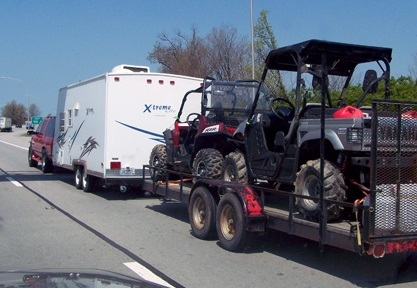
|
Example: Jeri and her teen-aged twins are on their way to a weekend camping
trip. She is towing a small trailer that has an all-terrain vehicle (ATV)
loaded on it. The trailer and ATV were lent to her by her ex-husband. A mile
away from the campground, Jeri's car slips off the road and onto a soft
shoulder. She loses control and crashes. Her son is
seriously hurt in the crash. The car is inoperable, but Jeri is able to
unload the ATV and drive it on the road into town (after instructing her
daughter to watch her brother). During this emergency trip, the ATV becomes a
covered vehicle. |
|
2.
A definite coverage problem exists for any car that’s not a “covered auto,”
which the named insured either owns or has available for regular use. Why? Because
such a vehicle should either be listed or rated on the policy, or coverage
should exist under another party’s policy. There is no coverage for it under
this policy.
3.
Similar to exclusion 2., the SPAP disqualifies any car that’s not a “covered auto”
that a “family member” either owns or has available for their regular use.
4. Exclusion B.4 explains that the SPAP
is not meant to cover racing exposures. This item bars coverage for vehicles
that are participating in or that are preparing to compete or practice for an
organized race or speed competition.
|
Example: Carl and Josie’s Saturn slid
through a red light and struck another car. They were unable to stop in time
due to: |
|
|
Scenario 1: They were challenged to a race
by a driver at a previous intersection. They won the impromptu race, but they
weren’t able to brake their vehicle in time. Scenario 2: They had just won a race that
they had planned a week earlier. They wanted to prove that their regular
vehicle could outperform their neighbor’s customized vehicle. However, their brakes
couldn’t stop the vehicle before running the stoplight. Under these circumstances,
the SPAP would cover scenario 1, but exclude the second situation. |
|

Besides the activities just listed, exclusion 4. (a. and b.) also
applies to driver skill training and driver skill events. In addition, the
exclusion applies to those participating in any of the above instead of being
limited to only those competing. (09 18
change)
5. This exclusion bars coverage for loss
involving flying vehicles, whether flight is their sole capability or is among
their features. (09 18 change)
Category C exclusions
The
following situations are denied full coverage under the SPAP. In these instances,
protection is limited to the minimum financial responsibility limits of the
applicable garaging state:
1. There is no coverage for loss that occur when an insured is
driving while impaired by alcohol or any controlled substance. The only
exception is for incidents involving validly prescribed substances that are
used according to a doctor’s (or health care professional’s) instructions.
Note: There may be a question of whether an insurer might challenge
a loss that involves the use of medically prescribed marijuana. A key issue
would, of course, be the loss circumstances. Is it likely that operating a
vehicle while under the influence of medical marijuana would be following prescription
instructions?
Note: The issue of jurisdictions that have legalized marijuana sales
may have an impact on this exclusion in the future.
2.
No coverage applies to loss that takes place while breaking a serious (felony)
criminal law.
|
Example: Ariandra turned in a collision claim for extensive
damage to the rear of her car. Her insurance company did two things after
looking into the claim. 1. It denied the claim. 2. It contacted the police as
the damage was due to Ariandra smashing into a convenience store during a
burglary. |
Related Court Case: Insured
Guilty Of Fraud
3.
The policy denies coverage involving attempts to escape from law enforcement
officers.
4.
No coverage is granted when the loss involves an operator who does not have a driver’s
license or permit. The license or permit must be valid.
Note:
This is substantially different than the standard PAP. The rationale is
that this policy is designed for getting the right rate for significantly
riskier driving exposures. Part of the strategy for getting the correct rate is
to eliminate unidentified drivers.
5.
This exclusion for any loss that involves a vehicle’s business use contains a
valuable exception. It permits policy coverage for a described vehicle’s
business use, but only if the insurance company has been notified of such use.
The notification has to take place before any loss.
6.
There is no coverage for loss involving a car that is operated by either a
family member or other person who lives in the insured’s household, but the
insurance company has not been made aware of this operator.
Category D Exclusion
The SPAP does
not provide liability coverage for awards that are classified as either
punitive or exemplary.
|
Example: Kenny was sued for the injury and damages he caused. A
couple years earlier, he lost control of his car while speeding through a
neighborhood’s cul-de-sac. He smashed into a home and seriously injured a
young child who was playing on the home’s porch. Besides speeding, Kenny had
failed to replace his brakes which had been functioning very poorly for
months before the accident. The judge levied an additional $25,000 amount
along with what was awarded for the injury and damage. Kenny’s SPAP will not
pay any portion of the punitive award. |
Limit
of Liability
Item A of
this provision explains that the monetary limit that appears on the policy declarations
page is the maximum amount of coverage that applies to the damages from any
single loss. This maximum is not affected by the number of vehicles, insureds,
or claims involved, or the number of vehicles or premiums appearing on the
declarations page. This arrangement is true of both bodily injury and property
damage claims. The particulars of a given loss may well affect how payments may
be distributed, but the maximum remains the maximum.
|
Example: Dawson & Paige have an
SPAP with the following limits: |
||
|
Bodily
Injury |
$100,000/$300,000 |
|
|
Property
Damage |
$100,000 |
|
|
Medical
Payments |
$10,000 |
|
|
Collision |
$500
Deductible |
|
|
Other Than
Collision |
$500
Deductible |
|
|
Uninsured
Motorist |
$25,000/$50,000 |
|
|
|
||
|
Claimant |
BI Claim Amount |
|
|
One |
$43,000
(burns, plastic surgery) |
|
|
Two |
$12,000 |
|
|
Three |
$51,500
(paralyzed) |
|
|
Four |
$24,000 |
|
|
Five |
$17,800 |
|
|
Six |
$8,500 |
|
|
Seven |
$26,500 |
|
|
Total |
$183,300 |
|
|
Car |
PD Claim Amount |
|
|
One |
$23,000 |
|
|
Two |
$14,700 |
|
|
Three |
$19,600 |
|
|
Four |
$83,000 |
|
|
Five |
Total - $140,300 |
|
|
The above
claims under the one accident could be settled in a variety of ways. Under
bodily injury, all of the individual claimants qualify under the per person
insurance limits and the entire amount may also be paid under the per
accident limit. Under property damage, all of the cars individually qualify
for coverage under the insurance limits, but the total amount exceeds the limits.
Depending upon how the loss is settled, one or more of the claimants may only
get partial settlement or could be squeezed out from any coverage at all, say
if car four received total payment for its huge loss. |
||
Item B of
the Limit of Liability section addresses third party claims involving insureds
who are NEITHER the named insured nor a family member. The SPAP will:
1. Only pay the applicable state’s financial responsibility minimum
for bodily injury for a single person in a single loss. Such payment includes
the minimum requirement for medical payments/expenses.
2.
Only pay the applicable state’s financial responsibility minimum for bodily
injury for all persons in a single loss. Such payment includes the minimum
requirement for medical payments/expenses.
3.
Only pay the applicable state’s financial responsibility minimum for property damage
for all property damage involved in a single loss.
The payments
are not affected by the number of claims, persons or vehicles involved in a
single accident.
Item C of
the Limit of Liability section explains that, regardless of whether coverage
exists under more than one coverage part (specifically parts A, B and/or C), no
duplicate payments will be made under the SPAP. This limitation means that, even
if portions of a single claim qualify for coverage under Part A - Liability as
well as Part B - Medical Payments and/or Part C - Uninsured Motorists coverage,
an insured will not be paid more than once for any portion of his loss. This
clarifies the purpose of the SPAP to indemnify rather than enrich a claimant
for their accidental loss.
Out-Of-State
Coverage
The Special
Personal Auto Policy emphasizes being able to perform in compliance with the
legal realities of the environment that surrounds an eligible loss. Consistent
with this objective, this provision allows the SPAP to respond to a loss
according to a given state’s requirements. Item A.1 of this provision states
that the policy will provide a higher limit for bodily injury or property
damage liability coverage to meet whatever is minimally required by the state
in which a covered loss occurs. Item A.2 indicates that the SPAP will comply
with the minimum amounts and types of coverages that may be required by a
state’s compulsory insurance law while the covered auto is being operated in that
state.
|
|
Example: A policy is written in state
A, which requires combined single limits, and the policy has a limit of
$300,000. As it happens, a loss occurs while the insured is traveling in
state B, which mandates the limit of liability to be applied in split limits
for bodily injury and property damage liability. The SPAP would respond to
the accident by applying the $300,000 maximum consistent with the split limit
requirement, but it would not increase the maximum available. |
Item B of this
provision states that no one is eligible for duplicate payments. In total, this
provision makes the policy a much more reasonable coverage document by preventing
technicalities to bar or limit coverage because of the different ways that
states structure their coverage requirements. Imagine if no such provision
existed and a person from state A had to travel across the country and had the
misfortune of being in an accident or having to show proof of valid insurance
in several states with different laws.
Financial
Responsibility
The SPAP, when considered as valid proof of financial
responsibility, is to be interpreted as complying with the governing financial
responsibility law. This is helpful and flexible since financial
obligations required of drivers vary significantly by state.
Related Article: Financial Responsibility Limits
Other
Insurance
When other
sources of liability insurance exist, Part A of the Special Personal Auto
Policy will pay on a basis that equals its share of the total amount of insurance
available to cover an eligible loss involving an owned auto. If the loss
involves a non-owned auto, the policy responds on an excess basis, paying only
after the primary policy has paid its limit.
|
Example: Let us
examine a total auto accident loss of $14,000 in damages. The loss is covered
by an SPAP and some other source of coverage. Assume that both sources have
coverage limits greater than the loss amount. Scenario
1: The loss involves an auto owned by the insured and the SPAP and the
other coverage source offer the same coverage limits. In this case, payment
would be: |
|
|
SPAP |
$7,000 |
|
Other
Source |
$7,000 |
|
Scenario
2: The loss involves an auto owned by the insured and the SPAP and the
other coverage source offer different coverage limits. Let us assume that the
SPAP’s limit represents 40% of the available coverage. In this case, payment
would be: |
|
|
SPAP |
$5,600 |
|
Other
Source |
$8,400 |
|
Scenario
3: The loss involves an auto that is NOT owned by the insured and the
SPAP and the other coverage source offer the same coverage limits. In this
case, payment would be: |
|
|
SPAP |
$0 |
|
Other
Source |
$14,000 |
Note: If a nonowned auto is involved,
it would not matter if the SPAP and the other source had different limits. The
other source would have to pay out its complete limit before the SPAP would
contribute any payment.
PART B - MEDICAL PAYMENTS
COVERAGE
Insuring
Agreement
Item A of
this coverage part explains that it will pay for necessary medical and funeral
services incurred by an “insured” suffering from accidental “bodily injury.”
Like the latest edition of the Personal Auto Policy, the SPAP also contains
clear wording regarding the eligibility of such expenses. It states that only
those expenses incurred within 3 years from the date
of the accident will be paid.
The intent
is to limit payment to accident-related expenses that actually were paid for
services provided no later than three years after an accident. Early editions
of the PAP (from which the SPAP was developed) were open for interpretation and
that situation led to broader coverage than intended, such as providing
coverage for services that were merely identified within three years of a loss
date. It also led to payment for services that were incurred in the three-year
window and then continued beyond that period.
|
Example: Laury is insured under an SPAP and she collided with Harry
at an intersection in January 2020. Harry suffered some deep cuts to his
thighs and legs and Laury’s policy paid for an ambulance trip and for stitches.
In January 2023, Harry visits his doctor about continued pain in his legs.
His doctor catches bone deterioration resulting from trauma suffered in the
January 2020 accident. He is scheduled for February 2023 surgery and he
undergoes two months of rehabilitation. Harry contacts Linda’s insurer to
handle the latter recently identified expenses. The situation is not covered
by the SPAP since the expenses were incurred later than three years from the
accident date. |
The insuring
agreement’s current wording is meant to eliminate such long-tailed obligations.
Item B of
this coverage part defines “insured,” differently than under Part A. An insured
is only the named insured, resident spouse, and any family member. Furthermore,
they are insured only while occupying a vehicle that’s primarily meant to be
operated on public roads, including trailers. They are also insureds if struck
by such a vehicle. Further, any person while in “your covered auto” is also an
insured under this coverage part.
Exclusions
Not all injuries
are covered. There is no coverage under the following circumstances:
1.
If injury happens while the insured is in a vehicle with
fewer than four wheels.
2. When the injury takes place
while the vehicle is being used to transport persons or property for income. This exclusion makes
reference to coverage ineligibility when any insured driver is actively
using any vehicle in conjunction with a transportation network platform. Active
use means providing such use as a driver. The exclusion applies both while
seeking passengers and during transporting passengers. (09 18 change)
Both
the 01 06 and the 09 18 SPAP editions retain an important exception to this
exclusion, but there is a difference.
a.
Coverage is still permitted for vehicles used in traditional carpools (where
the insured gets gas and maintenance money from carpool riders).
b.
An additional exception is referenced, allowing coverage for a vehicle during
its use in charity and volunteer situations. Protection extends to instances of
both ownership and operation. (09 18 change)
3.
If the injury happens while the vehicle is set up and being used as a premise
or residence.
4.
If it occurs while on the job, and workers compensation coverage is either
available or required for the bodily injury.
5.
If the bodily injury happens while an insured is occupying or is hit by a
vehicle that should be covered by this policy (but is not listed on the policy)
because it is either owned by the insured or regularly available to him or her.
6. If the bodily injury happens while an insured is occupying or is
hit by a vehicle that could be covered by this policy (but is not listed on the
policy) because it is owned by or is a vehicle that is regularly available to a
“family member.”
Note:
Exclusions 5. and 6. describe situations that represent a regular personal auto
exposure that should either be rated under an insured’s SPAP or under the insurance
carried by the applicable vehicle’s owner.
7. No coverage
applies if bodily injury occurs to a person occupying a vehicle without the
belief that she or he has the vehicle owner’s permission. This exclusion does
not apply when a family member is using a vehicle covered under this policy
that is owned by the named insured.
|
Example: John is walking
to school on a freezing winter’s day. He sees that, as usual, one of the
neighbors has left their car running in order to defrost the windows. Without
thinking, John enters the car and starts backing it out of the drive, he misjudges
the driveway’s end as well as its iciness and the car plunges into the steep
culvert, damaging the rear of the car. John suffers a strained neck and
severe back injuries. His medical treatment costs are uncovered since he had
no permission to operate the car. |
8.
This item prohibits coverage for bodily injury suffered while in a vehicle
that’s being used in an insured’s “business.” The only exception is when the
vehicle is covered under this policy.
9.
and 10. eliminate coverage for bodily injury caused directly or indirectly
by a nuclear weapon, reaction radiation or contamination; or by war, civil war,
insurrection, rebellion, or revolution.
11. Under Part B - Medical Payments
Coverage also contains the clarification that denies coverage for injury
involving any vehicle while it is preparing for or competing in a race. This exclusion also applies to driver skill
training and driver skill events. In addition, the
exclusion applies to those participating in any of the above instead of being
limited to only those competing. (09 18 change)
12. No coverage exists when a listed car is used for transporting
food or products (except when it involves volunteering).
13. There is no coverage for loss that occur while an insured is
driving while impaired by alcohol or any controlled substance. The only
exception is for incidents involving validly prescribed substances that are
used according to a health care professional’s instructions.
14.
No coverage applies to loss that takes place while breaking a serious (felony)
criminal law
15.
The policy denies coverage involving attempts to escape from law
enforcement officers
16.
No coverage is granted to an individual operating a vehicle without a driver’s
license or permit. However, other insureds injured in an accident caused by
that operator could still have coverage.
17.
This is an unusual exception that permits policy coverage for a described
vehicle’s business use, but only if the insurance company has been notified of such
use. The notification has to take place before any loss.
18. There is no coverage for loss involving a car that is operated
by either a family member or other person who lives in the insured’s household,
but the insurance company has not been made aware of this operator.
|
Example: Kim has an
SPAP from Ruinrok Casualty and the policy’s declarations page lists her ’18
Dodge Charger. Further, Kim is the only driver listed on the policy. Kim’s
teenage brother, Tom, comes to live with her and, to help him out, she buys
him a ’13 Civic so he can get to and from work. When Tom hits another car
while returning from work, Kim turns in a loss report. However, since neither
Tom nor the car were ever listed on Kim’s policy, no coverage applies. |
The following exclusions were added in the 09 18 edition of
the SPAP:
19. No medical
payment protection extends to an insured for incidents of vehicle ownership,
maintenance or use during the period that both of the following apply to the
vehicle:
a. There is a written contract under which the vehicle is
part of a personal vehicle sharing program
b. That vehicle is being used by a person other than the
named insured or a family member (as defined) of the named insured. (09 18 Change)
20. This exclusion is also new. It bars
coverage for loss involving flying vehicles, whether flight is their sole
capability or is among their features. (09
18 Change)
Limit
of Liability
Item A
explains that the monetary limit that appears on the policy declarations page
is the maximum amount of coverage that will apply to the damages from any
single loss. The number of vehicles, insureds, or claims involved in a given
loss does not affect this maximum amount. It is also unaffected by the number
of vehicles or premiums appearing on the declarations page. The details of a
given loss may well affect how payments may be distributed, but the maximum remains
unaffected by such loss-handling details.
Item B of
the Limit of Liability section explains that, regardless of whether coverage
exists under more than one coverage part (specifically parts A, B and/or C), no
duplicate payments will be made under the SPAP. This limitation means that,
even if portions of a single claim qualify for coverage under Part B - Medical
Payments as well as Part A - Liability and/or Part C - Uninsured Motorists
coverage, an insured will not be paid more than once for any portion of his
loss. Please refer to the example under the Part A - Limit of Liability section
for an illustration of this provision.
Other
Insurance
In the event
that other sources of medical payments insurance exist, Part B of the Special
Personal Auto Policy will pay on a basis that equals its share of the total
amount of insurance that is available to cover an eligible loss involving an
owned auto.
|
Example: Jason is eligible for
medical payments coverage and two other sources of recovery. The SPAP has
limits of $3,500; source two, $5,000; and source three, $6,500. The loss
amount is $6.500. The total amount available for the loss is not $15,000 (the
sum of the three sources) but $6,500, the amount of the loss. However, the
SPAP will pay only on a basis that equals its share of the total amount of
insurance that is available to cover an eligible loss involving an owned auto.
This means that the SPAP would pay $3,500/$15,000 X $6.500 = $1,517. |
If the loss involves a non-owned auto, the SPAP responds
on an excess basis, paying only after the other available coverage has paid its
limit.
Note: Regardless of the existence of other sources,
the SPAP will only pay a maximum of its applicable, displayed limit.
PART C - UNINSURED MOTORISTS
COVERAGE
Insuring
Agreement
This part
protects an “insured” against “bodily injury” caused by an accident with an
“uninsured motor vehicle.” In such instances, an insured’s own policy will respond
to injuries resulting from an accident where the driver who caused the injury
doesn’t have the resources to handle the legal obligation. However, this
coverage part is not bound by any judgment for damages determined by a lawsuit
that’s filed without the company’s written consent.
Note: Different states vary on the
uninsured motorists issue. The common differences include whether the coverage
is mandatory, what limits must be offered, the availability of underinsured
coverage (including if UIM is considered part of UM coverage), and if UM
coverage can be rejected.
Related
Article: Auto Uninsured/Underinsured Motorists Coverage Requirements
Uninsured
motorist losses continue to be a major concern for insurers. Operating an auto is
commonly (and in our opinion, wrongly) considered a right. Unfortunately, that
attitude is frequently unaccompanied by the financial responsibility associated
with it. Insurance companies have a very difficult time trying to price and
control this loss exposure. One reason for the difficulty is that the exposure
is hard to predict. Other than determining if a given territory has a higher
number of uninsured drivers, how can a company gain insight on the likelihood
of a loss involving a driver who is not insured?
Item B of the uninsured motorists coverage insuring
agreement defines who is considered an insured. An insured includes the named
insured and resident spouse, any “family member,” any other person “occupying”
“your covered auto,” and any person eligible for payment because of bodily
injury damages suffered by an insured.
|
Example: Mindy is the executor of the
estate for Beebe, who dies after being in a collision with an uninsured
motorist. Mindy drives Beebe’s damaged, but functioning car to Beebe’s
insurer’s auto claims facility. During that time, Mindy is an insured under
Beebe’s policy. |
Of course, no matter how well a policy tries to explain who
is considered an insured, anything can be questioned in court.
Related Court Case: "Family Member Definition
Held Not to Extend to Son"
Precisely
what is considered an “uninsured motor vehicle” is the subject of Item C of
this section’s insuring agreement. Part C differs from other parts of the
policy because it uses the broadest definition of a vehicle. Any “land motor
vehicle” or trailer may be an “uninsured motor vehicle” if no bodily injury liability
policy or bond applies to the vehicle. Such a vehicle could still qualify as an
“uninsured motor vehicle” if a bond or policy does apply but the writer of the
coverage denies coverage or becomes insolvent. Finally, a hit-and-run vehicle
is also an “uninsured motor vehicle” when it hits the named insured (includes
resident spouse) or a family member, or any car occupied by these classes of
people, or it hits a “covered auto.”
However, the
policy’s definition of an uninsured vehicle doesn’t include any vehicle or
equipment that either belongs to or is regularly available to the named insured
or any family member, or any vehicle owned by a governmental entity. Vehicles
used as a residence, vehicles which operate upon crawlers or treads, or
vehicles made primarily for off-road use also are disqualified as uninsured motor
vehicles.
The logic
behind excluding many of the types of vehicles is that the SPAP is not designed
to handle exposures that should be handled by other types of policies such as
motor home, recreational vehicle, or mobile home policies. The exclusion also
intends to avoid a very high source of “uninsured” vehicle operation -
off-the-road recreational activity.
Exclusions
Under Item A,
the following situations bar coverage for bodily injury:
1.
No coverage exists for any insured if he or she is hit by or hit while occupying
a vehicle owned by that insured (including a trailer) that isn’t insured
under this uninsured motorists coverage.
2.
No family member is covered if they are hit by or occupying a vehicle that is
owned by the named insured, but that is covered by any other policy.
Under Item B, No insured qualifies for uninsured
motorists coverage for bodily injury under the following circumstances:
1. If a claim is settled
without the company’s consent. However, this applies only if the settlement hinders
the insurance company’s recovery rights. In the instance of an unapproved
settlement of a bodily injury claim, it is only excluded if the action
prejudiced (damaged or eliminated) the insurer's rights. This eliminates the
application of an exclusion when, for all intents, an insurer's position has
not been adversely affected by an insured’s action. Previously, certain losses
could have been denied, purely on technical grounds. Nationwide, courts have
been rejecting such results.
2. There is no coverage for an insured while in a vehicle that’s
transporting people or property for pay
This
exclusion makes reference to coverage ineligibility
when any insured driver is actively using any vehicle in conjunction with a
transportation network platform. Active use means providing such use as a
driver. The exclusion applies both while seeking passenger contacts and during passenger
transportation. (09 18 change)
|
Example: When not working at her regular job, Karen is a CityShare
driver. Her SUV is written under a 09 18 Special Personal Auto Policy. While on
the way to pick up her night’s first CityShare passenger, she causes a
collision. This accident would be ineligible under the SPAP as it involved
active use of a transportation network platform. |
Both the 01 06 and the 09 18 SPAP
editions maintain an important exception to this exclusion, with a difference.
a.
Coverage is still permitted for vehicles used in traditional carpools (where
the insured gets gas and maintenance money from carpool riders).
b.
An additional exception is referenced, allowing coverage for a vehicle during
its use in charity and volunteer situations. Protection extends to instances of
both ownership and operation during such instances. (09 18 change)
3. Further, uninsured motorists
protection is not extended when the loss involves a vehicle that is used
without permission. However, the question of permission does not apply to a
“family member” who is operating a vehicle that qualifies as a “covered auto.”
Related Court Case: Son
Did Not Qualify As A Permissive Driver
4. No coverage is
granted for any incidence of vehicle use during an accident that involves moving
persons or products for reimbursement. Similar use that is voluntary is exempt
from the exclusion.
5. No uninsured motorist protection extends to
an insured for incidents of vehicle ownership, maintenance or use during the
period that both of the following apply to the vehicle:
a. There is a written
contract under which the vehicle is part of a personal vehicle sharing program
b. That vehicle is being
used by a person other than the named insured or a family member (as defined)
of the named insured who is participating in a program referenced in 4. a.
above. (09 18 addition)
6. This exclusion is also new. It bars
coverage for loss involving flying vehicles, whether flight is their sole capability
or is among their features. (09 18 addition)
Items C and D
explain that no coverage exists if coverage should be handled by either workers
compensation or disability benefits law, and those payments are not made for
punitive or exemplary damages.
|
|
Example: Jonah’s car is insured under
an SPAP that includes UM limits of $50,000/100,000. Jonah is going through an
intersection when he is struck by Millie’s clunker of a pick-up. Millie was
speeding and she ran the red light. She ended up demolishing Jonah’s sports
model Escalade and Jonah suffers a severe hip injury. Jonah sues Millie who, unfortunately,
was also driving without insurance and without a valid license (her license
had been suspended for previous accidents and violations). Jonah wins a
settlement of $75,000 but $35,000 of the award is classed as punitive
damages. Jonah’s insurer pays Jonah $40,000 under his UM coverage However,
the punitive portion of the award is ineligible for coverage under the SPAP. |
Limit
of Liability
Item A
explains that the monetary limit that appears on the policy declarations page
is the maximum amount of coverage that will apply to the damages from any
single loss. This maximum is not affected by the number of vehicles, insureds,
or claims involved, or the number of vehicles or premiums appearing on the
declarations page. The particulars of a given loss may well affect how payments
may be distributed, but the maximum remains the maximum.
Item B of
the Limit of Liability section explains that, when a UM loss involves a covered
driver who is neither the named insured or a member of
the named insured’s household, the maximum coverage available is the amount of
financial liability required by the given state where the covered auto is
primarily garaged. This maximum is not affected by the number of vehicles,
insureds, or claims involved, or the number of vehicles or premiums appearing
on the declarations page.
Item C of the
Limit of Liability section explains that, regardless of whether coverage exists
under more than one coverage part (specifically parts A, B and/or C), no
duplicate payments will be made under the SPAP. This limitation means that,
even if portions of a single claim qualify for coverage under Part C -
Uninsured Motorists Coverage as well as Part B - Medical Payments and/or Part A
- Liability Coverage, an insured will not be paid more than once for any
portion of his loss. This limitation also applies to any coverage available
under any underinsured motorists coverage provided by the policy. It exists
because the SPAP is meant to indemnify rather than enrich a claimant for their
accidental loss. Please refer to the example under the Part A - Limit of Liability
section for an illustration of this provision.
Item D affirms
that the SPAP will not pay for any portion of a loss that already has been paid
by any party responsible for that loss.
|
Example: Carla Applecheek and her son
are on their way back home from a victory at a pee-wee ice hockey game when
they’re hit by Jonni, who ignores a stop sign. Jonni drives an old, rusty ‘00
Chevy that is, surprise, not insured. Therefore, the Applecheeks apply for
coverage under the $25,000 uninsured motorist coverage part of their own
SPAP. Their company pays them $6,700 for their injuries but later, after finding
out that Jonni paid them $1,250 that he was saving for a new car, the insurer
requires the Applecheeks to return $1,250 of its payment. |
Item E explains
that no coverage exists if coverage should be handled by either a workers
compensation or a disability benefits law.
Other
Insurance
If other
sources of insurance or other policy provisions apply to an uninsured motorist
loss, this provision intends to make sure that such sources are contemplated
when compensating an insured for a loss. This provision of the Special Personal
Auto Policy provides that the total amount of coverage available to pay for losses
involving uninsured motorists is no higher than the greatest amount provided
for a single vehicle.
|
Example: A covered loss of $70,000
occurs. There are three different sources of recovery to pay for the loss. The
SPAP has limits of $25,000; source two, $50,000; and source three, $15,000.
The total amount available to pay for the loss is not $90,000 (the sum of the
three sources), but instead it is $50,000 because it is the highest limit
available of the three sources. This means that the loss is capped at $50,000
not $70,000. The amount
the SPAP will pay is determined by dividing its limit by the total limits
available. Therefore,
the amount paid by the SPAP is computed as $25,000/$90,000 X $50,000 =
$13,889. |
The total
amount that may be paid on the loss may not exceed the
total amount of primary and excess coverage available for any single auto. If
the loss involves a non-owned auto (including autos that qualify as temporary
substitutes), the uninsured motorist coverage part responds on an excess basis,
paying only after the other available coverage has paid its limit.
Arbitration
A. If we and an “insured” do not agree
If the company and
their insured aren’t on the same wavelength regarding whether a loss payment is
due and/or how much is due in an uninsured motorist loss, the argument may go
to arbitration. However, both the company and the insured must want the
disagreement to be handled by representatives of their own choosing. A judge
may be called upon to select a third arbitrator if that person isn’t selected
by the first two arbitrators within 30 days.
Related Court Case:
“Insurer Must Accept Decision Of Its Approved Umpire” - though the case does
not involve a personal auto, it illustrates the power of an arbitration clause.
B. Distribution of arbitration costs
Each party will
handle their own out-of-pocket expenses, as well as share in the cost of the
third arbitrator. The arbitrators must follow the local rules of law in their
discussions.
C.
Unless both parties agree otherwise
The insurance company and the insured must
accept the decisions agreed on by any two arbitrators as legally binding in the
areas of determining a valid claim and the amount to be paid. An exception is
made if the arbitrated amount is greater than the minimum bodily injury
liability established by the applicable financial responsibility law. If this
disparity occurs, either the insurer or the insured can insist on going to
trial. However, if no party contests the amount within 60 days, the decision,
regardless of the amount, is binding.
PART D - COVERAGE FOR DAMAGE
TO YOUR AUTO
This section
is much different than the policy’s earlier sections. Instead of liability to
other injured parties, it deals with actual damage to the insured’s covered
vehicle (including expenses because of loss of use of the same).
Insuring
Agreement
Under item A
of the insuring agreement, the Special Personal Auto Policy agrees to protect
“your covered auto” or a “non-owned auto” against accidental loss. Any payment
includes compensation for loss to auto equipment but does not include the applicable
deductible. If you’re unlucky enough to have more than one covered vehicle
involved in the same collision loss, only a single, highest deductible will
count against any loss payment.
|
Example: Barney and Kloorene Runarown
have two Minivans that are covered by a SPAP. The vans aren’t their vehicles
of choice, but they also have four lovely offspring who keep them incredibly
busy with their sports and other activities. It’s fall and the Runarowns often
have to split up in order to handle four kids on four different sports teams.
It’s not unusual to have one parent zoom into their driveway to pick up some
little Runarowns, while the other is zooming out with the others. One day,
instead of zooming in and out of their driveway, they zoom into each other.
While there was $4,200 in damages to his van and $2,900 to hers, they were
glad that only a single $500 deductible applied to the loss to their two
vehicles. |
This section
clearly applies only to collision and other than collision losses, but only if the
policy’s declarations page shows a deductible choice to indicate that these
coverages apply. Should a loss involve a non-owned auto, the broadest coverage
written for “your covered auto” applies.
There is an
exception. If the non-owned vehicle is substituting for a scheduled vehicle,
coverage for the non-owned vehicles is only as broad as the vehicle for which
it is a substitute.
Item B of
the insuring agreement explains that “collision” refers to your covered auto or
your non-owned auto which has either hit or been hit by another vehicle or some
other inorganic item. It’s implied that the event has to result in damage to
your car.
|
Example: While parking your car at a
supermarket, you slam headfirst into a fully inflated helium balloon that’s
being used to promote their fresh cucumber sale. Besides creating a lot of
laughter, no harm is done to your car or the store’s balloon. Collision? Yes.
A loss under Part D? No, because nothing was damaged or destroyed. |
“Other than
collision” simply refers to those events that aren’t collision. The SPAP lists
10 events that qualify as other than collision losses. If your covered car is
damaged by items falling from the sky, fire, theft, explosion or earthquake, windstorm,
hail or flood, vandalism, rioting, contact with birds and animals, or if glass
has broken, you’ve experienced an other than collision loss. The SPAP is
flexible about losses involving glass. If any vehicle glass is broken during a
collision, an insured may choose to have it covered under the collision portion
of the policy.
Item C. “Non-owned”
auto issues - These are private-passenger vehicles (including trailers),
vans and pickup trucks that, while being operated or used by an insured, aren’t
owned by or regularly available to any insured (which includes any “family
member”).
|
Example: A SPAP is written for a
husband and wife. The wife is late coming home from work, so the husband
borrows his neighbor’s car to take his daughter to a sleepover. This is an
eligible non-owned situation. |
|
Example: Your son’s Little League
coach has to stay at the park to prepare the baseball diamond for the next
day’s game, but he promised his team a pizza dinner. You agree to take the
kids over to the restaurant in his minivan while he uses your Chevy in order
to join you in an hour. This is an eligible non-owned situation. |
|
Example: You borrow your neighbor’s
car to go to the mall. The car belongs to the neighbor’s daughter, who’s away
at college. They gave you an extra set of keys so that you can use it as
needed, as long as you keep gas in it. This is NOT an eligible non-owned
situation. |
|
|
Example: Mom has to pick up some
groceries for a dinner party. Dad has the insured,
family car, so she jumps into her son’s car. It’s an old “beater” that’s not
registered or licensed...the son is going to take care of that after it’s
completely fixed up and painted. This is NOT an eligible non-owned situation. |
Note: This definition is similar to other
parts of the policy by only covering pickups or vans with a gross vehicle weight
of 10,000 or less.
|
Example: Joe is in a hurry to pick up
his fiancée from the airport. He hasn’t seen her in
nearly three months. He jumps into his ‘13 Miata, turns the key and, nothing.
He then notices that he left his glove compartment open. Its small light must
have been on until it drained his battery. Joe’s neighbor, Sonny, says he can
borrow his truck. The truck is a two-ton flatbed truck with wood stake sides
and is from “Sonny’s Tree Barbers.” Joe’s fiancée, Sylvia, won’t be thrilled...and
neither would anyone involved in an accident with Sonny. While the truck is a
substitute, its weight disqualifies it for coverage. |
Further, vehicles
that fall under the policy’s temporary substitute definition are not non-owned
autos.
Exclusions
Part D - Coverage
for Damage to Your Auto will not pay for:
1. Loss to an owned or non-owned
auto that occurs while it is used for hire to transport persons or goods. This exclusion makes reference
to the coverage ineligibility when any insured driver is actively using any
vehicle in conjunction with a transportation network platform. Active use means
providing such use as a driver. The exclusion applies both while seeking
passenger contacts and during transporting passengers. (09 18 change)
Both the 01 06 and the 09 18 SPAP
editions maintain an important exception to this exclusion, with a difference.
a.
Coverage is still permitted for vehicles used in traditional carpools (where
the insured gets gas and maintenance money from carpool riders).
b.
An additional exception is referenced, allowing coverage for a vehicle during
its use in charity and volunteer situations. Protection extends to instances of
both ownership and operation during such instances. (09 18 change)
2.
Damage resulting from your car’s aging, extremely cold weather, mechanical or
electrical breakdown, or road damage. An exception is made for such damage that
results from the total theft of a covered auto (owned or non-owned).
|
Example: It took Pete two hours to
start his car during a typical winter’s morning in |
|
Example: Pete gets a new car and is
leaving a restaurant to get his car from his parking space when he notices
that a stranger is breaking into the car. The thief sees Pete, starts the
hot-wired car, and drives out of the lot. The thief is in such a hurry that
she doesn’t bother to avoid a loose sewer cover while escaping. The police
discover the car the next day with the interior stripped of electronics. The
front end, including the tires, is severely damaged. Normally, the destroyed
tires would be excluded, but since it happened during a theft, Pete’s
settlement would include reimbursement for the tire damage. |
3.
There’s no coverage for any loss caused by radioactive contamination, nuclear
weapons, war, insurrection, rebellion, or revolution.
|
Example: Alan Newtron is coming home
from work and he rear-ends a panel truck from a hospital that just started
operating in his area. He is puzzled when, as he gets out to trade insurance
information, the doors of the truck are flung open. Screaming, the truck’s
driver and two passengers jump out and run from the truck. Alan also wonders
why they were wearing protective suits. Alan’s curiosity is satisfied when he
peers into the truck and notices that a new X-ray machine is laying in the
back...cracked into two pieces. Any damage caused by the ongoing irradiation
is excluded from coverage. |
4.
Part D of the SPAP does not cover loss to electronic equipment intended to
reproduce sound, including any accessories or related equipment. For instance,
the SPAP begins by excluding coverage for equipment such as radios, tape decks,
stereos, or compact disc players. However, there are some exceptions. There IS
coverage for equipment and accessories IF the equipment is permanently
installed in your covered auto or any non-owned auto by the auto manufacturer.
|
Example: Henni Oldmun loves his ’10
Lexus. Even though it came with a beautiful sounding CD player, Henni has a
friend put a special CD recorder/player into the car. Henni is a senior
project manager who spends much of his business day in his car traveling
between job sites. Since he has to produce reports on how his projects are
progressing, he records updates and later has them transcribed. Last week he
was late for a meeting and he ran out of his car without arming the alarm
system. Henni came back to a Lexus that was minus everything that wasn’t tied
down and this included his recorder. Henni’s mood wasn’t improved when his
insurance company adjuster said that the recorder was not covered. Henni said
that it should be covered because the unit was permanently installed in his
car. The adjuster pointed out it had not been installed by the auto
manufacturer. |
5.
This exclusion is for any media (tapes, CDs, records, etc.) that is used with
such equipment as well as any accessories used with the equipment described in
exclusion 4.
6.
This exclusion explains that the Part D - Damage to Your Auto doesn’t respond
to a loss of either an owned or non-owned auto that’s destroyed or taken by
legal authorities. Of course, an exception is made for the financial interests
of loss payees. It isn’t in the public interest to deny protection to lenders
because of the illegal acts of their borrowers.
7.
There’s no coverage for a camper body, motor home or trailer owned by an insured,
but not listed on the declarations page. Neither is there any coverage for
awnings, cabanas (lightweight structures with living facilities) and equipment
designed to create additional living facilities including cooking, refrigerating,
or plumbing equipment. Are there any exceptions? Yes. This exclusion doesn’t
affect coverage for trailers (including their facilities or equipment) that are
NOT owned by an insured.
|
Example: Sarah Grizzled was a poor,
but avid, backpacker. While she usually just liked to camp with a tent, a
friend convinced her to borrow his camper trailer for an excursion out West.
Sarah was initially skeptical but, after a week’s use, came to truly enjoy
the trailer. Sarah was as upset as her friend when, while cresting a narrow,
twisting mountain road, a quick maneuver caused the trailer to swing into the
mountainside, obliterating the camper. This loss would be eligible for
coverage under the SPAP. |
|
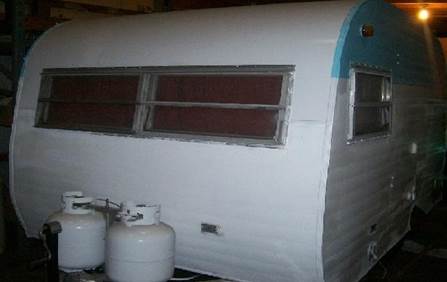
The SPAP also provides coverage for
trailers (including their facilities or equipment) that are newly acquired by
the insured and which are reported to the insurer within 14 days. The intent of
the policy is to make sure that all vehicle exposures are reported and rated.
|
Example: A retired couple buys a
travel trailer without reporting it to their insurance company. Two weeks
later, they take off on an extended vacation, a cross-country trip. Just as
they’re entering the third week of travel, the trailer detaches from the
hitch while heading toward |
Of course, coverage would also apply to
such equipment that the insured already owns on the date that the property is
reported and coverage requested by the insured. However, most companies have
their own additional restrictions in order to protect themselves against
insureds who try to save money by requesting coverage while a trailer is being
used (such as the summer) and then removing coverage while the property is in
storage.
8.
Any insured, including a family member, who has a loss involving a non-owned
auto will find himself without coverage if he doesn’t believe he has permission
to use the auto.
|
Example:
Kerri and her friends go outside to play a game of basketball and are
disappointed to see a car parked in the driveway, blocking the basketball goal.
The car belongs to a friend of Kerri’s mom and that friend left her keys in
the ignition. Kerri and her friends jump inside, planning to move the car onto
the street. Instead, they decide to drive several blocks to pick up some
snacks at a convenience store. On the way back, they cause
a collision. This loss is not covered by Kerri’s Mom’s SPAP. |
9.
Any equipment used to detect or locate radar or lasers isn’t protected if
it is lost or damaged.
10.
All custom furnishings and equipment are excluded from coverage. Examples of such
items are carpeting, insulation, furniture or bars, ovens, microwaves, beds/couches,
roof extensions, murals, paintings, etc. These items should be separately
endorsed since their value is rarely included in the vehicle value used to rate
the basic physical damage coverage.
ISO provides a special endorsement where these items can be
listed and rated (PP 93 18 Special Personal Auto Policy Customizing Equipment
Coverage).
Related Article: Special Personal
Auto Policy Endorsements
Is there an exception to exclusion 10?
Yes. The exclusion is not extended to a pickup truck’s cap, cover, or bed liner.
However, an insured MUST be the owner of the pickup that is equipped with this
property.
11.
This eliminates coverage for any non-owned auto that is being held or used by
any insured while working at selling, repairing, servicing, storing, or parking
cars. The exclusion specifically mentions road testing and delivery. HOWEVER,
this exclusion just applies to vehicles that are made for use on public highways.
12.
There is no coverage for any auto used in a speed contest or race. Besides the activities just listed (racing
and speed contests), this exclusion also applies to driver skill training and
driver skill events. In addition, the exclusion applies to those participating
in any of the above instead of being limited to only those competing. (09 18 change)
13.
This is no protection for any loss to a non-owned auto (including loss of use)
rented by an insured when any applicable state law or rental agreement
prohibits a rental car company from collecting for any loss or loss of use. In
other words, the SPAP won’t provide protection when either state law or a
rental contract provides that coverage must be part of the rental transaction.
Such a legal requirement makes coverage under an SPAP unnecessary.
|
Example: Karen Sufistakatid and her
fiancé are on vacation and Karen has suggested spending a week traveling in
the bordering western state. Although Karen’s late model car is covered by an
SPAP, she prefers to rent a car since she doesn’t want to affect the mileage
use of her leasing agreement. Before renting the car, she asks her insurance
agent if she should get coverage for the rental. The agent says, “I guess so,
but I think your policy covers rentals.” Karen then calls a local car rental
company. A rental clerk says that she can use her auto policy as coverage but
must sign a special agreement to allow her credit card to be automatically
billed for any losses to a rental including a daily charge for lost car
rental income. Karen is relieved when she finds that the state, she is
vacationing in requires all rental companies to provide full coverage for ANY
loss to a rental car for only a few dollars a day. |
14.
There is no coverage for features used to customize a vehicle and the bar to
coverage applies to both furnishings and equipment. The policy specifically
mentions such items as power-enhancing equipment, roll/sway bars, winches,
custom tires, tire covers (including spinners), custom chrome, paint, decals,
etc. However, these are mentioned only as examples, any component added onto a
vehicle to customize it would be ineligible for coverage.
|
Example: Tonya’s new Chevy Malibu is
insured under an SPAP for both liability and for physical damage. She is very
upset when, while attempting to negotiate a hilly curve, she lost control of her car. She crashed through side rails
and slid a couple hundred feet along the road’s pitted shoulder. Her injuries
were very minor, but the car was totaled. The |
15.
The policy will not cover any loss when the vehicle is being used to deliver items food or product. Examples are newspapers and magazines
but the exclusion is not limited to merely these situations. There is one exception.
Coverage is granted for such transport when it is for volunteer purposes.
|
Example: Stacia wasn’t able to brake
her car in time for a red light and she hits a
stopped vehicle. Besides the damage to the other car, her front-end damage
exceeds $3,000. Scenario 1: The damage to Stacia’s
car is not covered because the collision occurred while she was delivering a
food order for her employer, Peking Pasta. Scenario 2: The damage to Stacia’s
car is covered because the collision occurred while she was delivering a food
order for her church’s shut-in members. |
16.
The policy will not cover any loss when it involves any driver impaired by
alcohol or by a substance that meets the definition of a controlled substance,
such as illegal narcotics. An exception exists for incidents involving a substance
that is properly prescribed by a health care professional, as long as the
medicine is used per instructions.
17. The SPAP also excludes
coverage for any non-owned vehicle that is used in business activities other
than those specifically mentioned in exclusion 11 above.
18. With the very important exception
of instances that are previously reported (and accepted) by the insurer, losses
surrounding vehicles that are used or maintained for business purposes do not qualify
for coverage.
|
Example:
During a storm, a large tree-branch falls and crushes the cabin roof of
Larry’s 4 X 4 truck. He turns in a claim that his insurer rejects. His truck
was parked in front of a house where he was delivering some repaired P.A. equipment
for his business, SoundMasturz Inc. |
19. An owned or non-owned car
that is damaged is disqualified from coverage if the loss takes place while it
is being driven by any person who lives in the insured household but who has
NOT been reported to the insurer (as a resident and driver).
20. The SPAP does not protect a
loss to a described vehicle when a loss occurs while that vehicle has been
rented to an entity who is neither the named insured nor a family member.
The following items were added in the
09 18 edition of the SPAP.
21. No loss to a covered vehicle applies during the period that both of
the following apply to the vehicle:
a. There is a written
contract under which the vehicle is part of a personal vehicle sharing program
b. That vehicle is
being used by a person other than the named insured or a family member (as
defined) of the named insured who is participating in a program referenced in 12.a
above. (09 18 Change)
22. No coverage extends to claims involving
a non-owned vehicle that involves damage, destruction, or loss of use of that
vehicle when such claims are related to the use of the vehicle under a personal vehicle sharing program. This
exclusion applies when both of the following apply:
·
A non-owned vehicle is used by the named insured
or a family member (as defined) of the named insured
·
No recovery can be demanded from the named
insured or family member due to the parameters of the sharing program’s written
agreement or due to state law. (09 18 Change)
23. This exclusion bars coverage for loss involving
flying vehicles, whether flight is their sole capability or is among their features.
(09 18 Change)
Limit
of Liability
The SPAP
does have restrictions on the total amount of coverage available for a loss to
a covered vehicle. Specifically, Item A of Part D - Coverage for Damage to Your
Auto - states that the policy is obligated to pay the actual cash value of the
lost (stolen or damaged [including total losses]) property or to pay what’s
needed to repair or replace the property, whichever is the LEAST EXPENSIVE
option. This provision includes the option of settling a loss by using property
of like kind and quality.
This section
also explains that the maximum available for the loss of a non-owned trailer is
$1,500.
Item B
explains that any settlement includes an adjustment for a vehicle’s decreasing
market value (depreciation) and physical condition when determining its actual
cash value after a total loss.
Under Item
C, the policy indicates that if the repair or replacement of a covered vehicle
results in an insured being better off than before the loss, the SPAP won’t pay
the value of the improvement.
As the cost
of vehicles and vehicle parts continues to increase, insurers face more
pressures to find options that indemnify rather than enrich their insureds.
Often, the repair of damaged property put an insurer in the position of having
to actually improve an insured’s position after a loss. It also became
problematic to use new parts to make repairs and then attempt to make adjustments to the value of the settlement. Requesting
insureds to participate in loss settlements above their coverage deductibles is
a hard sell, so the option of introducing the “like kind and quality” concept
made increasing sense, at least from the insurer’s side of the equation.
Insurers and
other parties routinely disagree about what is fair when replacing or repairing
property. Auto manufacturers and consumer groups continue to battle the
insurance industry’s use of generic auto parts instead of original manufacturer
parts. The resistance has been greater when the settlement option goes to the
“extreme” of offering a similar, but different, vehicle. Much of the controversy
may settle as time goes by and claimants become more familiar with the concept.
Payment
of Loss
This provision
discusses a company’s options in making a settlement on a loss to a covered vehicle,
stating that the settlement may be in the form of a cash payment, a repaired vehicle,
or a replacement vehicle. The insurer has the option to return any stolen property
to the named insured or to the latest address shown on the declarations page.
If any property is returned, the insurer must pay for doing so, and only after
any damages have been repaired. Further, should the company exercise the right
to keep the property it has to be at a price that’s acceptable to both parties.
Finally, if the settlement is made in cash, the total has to include any sales
tax.
No
Benefit to Bailee
The SPAP states:
Bailees and other carriers for hire are not
to benefit from this insurance.
The policy’s
intent is to perform its contractual obligations to the named insured and other
parties defined in the definitions, insuring agreements, and other policy provisions.
To do otherwise would be to open the policy up to parties who haven’t been
rated or underwritten for coverage and for more exposures than contemplated.
Other parties may benefit unintentionally from the policy without this
provision.
Related Court
Case: "Car Wash Assumes Liability When Customer Relinquishes
Vehicle For Service"
Other
Sources of Recovery
This
provision is to make sure that any payment under Part D of the Personal Auto
Policy takes other sources of loss payment into account.
Owned Autos
- If other insurance policies, provisions or sources of recovery apply to a
physical damage loss, the policy will only pay its proportion of the total available
coverage. But the proportional payment is only for owned autos. Non-owned Autos
- If other sources of payment exist for a loss involving a non-owned (including
a temporary substitute) auto, Part D of the SPAP responds on an excess basis.
It is excess over every other available source of payment, including the
policy of the owner of the car.
Note:
The provision to pay its proportionate share on owned auto losses effectively
assures that the policy won’t pay more than the limits of liability listed on
the declarations page. Of course, it has no other way to control the amount
paid by other sources.
Appraisal
This system
works quite similarly to an arbitration clause, except that the only point of
dispute is the amount of payment. This provision may be invoked when the
company and the insured don’t agree on the amount of the loss. Each party must
select its own qualified appraiser. The two appraisers then select an umpire.
The appraisers then submit their opinion of the actual cash value and the
amount of the loss. If they don’t reach agreement, they submit this information
to the umpire. An agreement by any two persons is binding on both parties.
The company
and the insured have to pay for the expenses of their own appraiser, as well as
equally share the expenses of the umpire. No other insurer rights are affected
by their agreeing to an appraisal. For instance, if another party has some
responsibility for the loss, the insurer, after paying the appraised amount of
loss, may still subrogate the claim.
PART
E - DUTIES AFTER AN ACCIDENT OR LOSS
This section
explains what an insured must do in order to fulfill his obligations once a
loss occurs. It is important that these conditions be met, since failing to
comply may relieve an insurer from having to pay for a loss. However, while the insured risks endangering his or her coverage
by failing to comply with their post-loss duties, the provision states that
coverage may be lost only if the failed duty harms or violates (prejudices) the
insurer's position. In other words, the provision does not permit a loss of
protection for a mere technicality.
|
Example:
The Smiths are insured under a SPAP and have been sued by a driver due to an
intersection accident. The Smiths call their insurer to tell them that they
received some important paperwork. The insurer asks the Smiths to send the paperwork
and that it would be good if they mailed it within a week. However, they
mailed the paperwork later than requested (see scenarios below). The insurer
later sends a letter saying they will not defend
against the claim because the “late” mailing was a breach of the policy’s
cooperation requirement. Scenario
1: The paperwork was mailed five days later so that the insurer received it
nine days after requested. This represents a technicality as it is extremely
unlikely that receiving the papers two days later than requested would affect
coverage. Scenario 2:
The paperwork was forgotten but eventually mailed such that the insurer
received it three months after requested. This represents a serious breach.
Receiving the papers so late may have harmed the insurer’s ability to investigate/handle
the loss. It could be grounds for denying coverage. |
A.
Notification. The insured must tell the company the accident details as soon as
possible. The notification may be to an agent, and, ideally, should include the
identity and addresses of any people hurt in the accident, as well as accident witnesses.
Item A is critical, since it initiates
the entire claims process, and it gives the insurer its first and best
opportunity to control the expense of the claim.
B. If an insured wants coverage, he/she must:
1.
Assist the insurer in the claim’s investigation and settlement, as well as help
with defending against any claim or suit.
2.
Immediately send the company copies of ANY material received that’s related to
the accident.
3.
Agree to attend as many:
a.
physical exams, involving doctors selected by the insurer and/or
b.
interviews under oath
as are reasonably requested by the
insurer. These requirements are at the insurer’s expense.
4.
Permit the insurer complete access to medical and other records that relate to
the accident.
5.
Give the insurer any requested proof of loss.
The conditions under item B allow an
insurer to evaluate whether a loss payment is due and how much has to be paid.
This area has a lot of potential for straining relations between the insurer
and the insured, since the two parties may differ over what is “reasonable.”
The insured may quickly become concerned with their privacy, as well as their
community standing. It is important that this provision spells out an insured’s
contractual obligations in order to document their cooperation and possibly
mitigate any hard feelings over repeated requests for help or information.
Related Court Case: Insured
Fails To Cooperate.
C.
If the loss involves uninsured motorists coverage, the insured is further
obligated to notify the police quickly if the accident was caused by a
hit-and-run driver, and to send the insurer copies of any legal papers should a
suit be filed. Hit-and-run losses are always difficult to investigate and are
always favorites for exaggerated, inaccurate, or fraudulent claims. The
requirement that such losses be immediately reported to the police is a way to
guard against claim problems.
D.
If the loss involves collision or other than collision coverage, the insured is
further obligated to:
1.
Protect their property from further loss. The company is obligated to reimburse
the insured if any additional expense is involved.
2.
Quickly notify the police if the covered vehicle is stolen.
3.
Allow the company to inspect and evaluate the damage
property BEFORE it is repaired or removed.
Preserving the damaged property after a
loss is extremely important.
|
|
Example: Tina returns home early in
the morning in her convertible and hits a very large landscape rock that’s in
front of her house. The damage is minor, but it includes damage to a
mechanism that makes it impossible to close the convertible top. Instead of
moving the car into the garage or covering the car, it’s left in the
driveway. Tina’s car remains outside, sitting exposed to a downpour that
severely damages the interior and the car’s electrical systems. This
situation creates a need to tow the car to have the damage inspected (when,
originally, it could have been driven), and it complicates the adjustment and
settlement. |
In the last instance, having any damage
repaired or getting rid of the damaged property is an extremely serious breach
of contract on the part of the insured, and could easily result in an insurer’s
refusal to make payment. If the insured vehicle is repaired or disposed of, the
insurer has no chance to evaluate whether coverage was due, nor determine how
much was due.
|
Example: Jeremy’s older car has a
significant number of body dents, scratches, etc., but still has collision and other than collision coverage. On the way to
work, he rear-ends another car. The damage to his own car is restricted to
his bumper and right front end. However, Jeremy takes the car to a garage and
has the accident damage repaired, as well as having all of the body dents
removed and the vehicle repainted. He then reports the loss, submitting the
total repair bill to his insurer. This late reporting complicates the third-party
situation, since there is a delay in contacting the owner of the car that
Jeremy hit. Further, it’s now impossible to determine what, if anything, was
due to be paid to Jeremy. |
PART F - GENERAL PROVISIONS
Bankruptcy
This
provision says that an insured’s bankruptcy or insolvency doesn’t release the
company from any obligations under this policy. This fact appears clear enough.
But what happens if an insured can prove that his bankruptcy prevented payment
of the policy premium in time, the policy then cancels and the insured has a
loss a day after the final cancellation date? Can this situation be interpreted
as still obligating the insurance company to adjust the loss and possibly make settlement? This writer is stumped. It would be interesting
to have the right circumstances argued to see what a court might think.
Changes
A.
This states that the policy is a complete agreement that can’t be changed, except
by the company issuing an endorsement.
This is important. If the insured were
allowed to change the policy, the most common changes would involve waiver of
premiums for life, guaranteed renewals, and unlimited liability limits. Not
that, from a consumer’s point of view, these wouldn’t be good policy features;
it’s just that the provisions would make it a little tough to earn a profit.
Fortunately, insurers are eager to help their customers make valid changes to
their policy to fit their current circumstances.
B.
The second item explains that the policy premium was based on a certain set of
facts. If any of this information changes, it could affect the rating of the
auto policy, and the insured’s premium may be changed. Items that could cause
the policy’s cost to change include the number, type, or use of vehicles; the
operators using the cars; where the vehicles are kept; and coverage, deductible
or limit changes.
|
Examples:
These are situations that could affect the policy’s rates: 1. The ’17 Sedan is replaced by
a ’21 subcompact, sports car. 2. A teenager gets his driver’s
license and is now a regular driver. 3. The minivan that used to be
driven one mile to and from school is now being used
to drive to work 42 miles one-way. 4. The insured requests that
the deductibles on collision and other than collision coverage be changed
from $100 to $500. |
Finally, item B of the changes provision
makes a reference that falls outside of the policy. It states that if a rating
change is necessary, the change will be performed in compliance with the
applicable company’s filed rating plan and rules.
Item C is a liberalization clause for
the benefit of consumers. If a company does something to expand the coverage under
the SPAP without charging additional premium, then the change immediately
applies to all similar parties in a given state. This provision does not apply when
an edition change occurs which both expand and restrict coverages.
|
Example: On May 1st, Company
A amends the SPAP to provide theft protection for Beach Boys vinyl albums for
up to $500, free of charge. Effective May 1st, policies that don’t
renew until after May 1st automatically gets this additional,
valuable protection. |
Fraud
This provision
is particularly brief and straightforward. The insurer advises that, if an insured
speaks or acts with the intent to mislead others regarding any loss or claim,
the insurer can deny coverage. Of course, this part of the insurance contract
is implied throughout the policy. Naturally, the wording does nothing to deter
fraudulent activity.
Legal
Action Against Us
This
provision forces the parties to use all of the tools within the policy before a
suit is attempted. In other words, an insured, disputing the existence of
liability or the amount that should be paid, cannot skip arbitration or
appraisal or cooperation with the company or providing proof of loss, etc., and
go straight to filing a suit. Further, even after compliance with all of the
policy provisions has occurred, no action can be filed unless there’s been a
written agreement that the “insured” is responsible for a loss payment OR the
amount of the payment has been settled via judicial proceedings.
|
Example: Theresa collided with a minivan
owned by a day care center. While Theresa was unhurt, the van’s driver and
several children had to be hospitalized for various injuries. Theresa was
unhappy with the defense provided by her insurer and was enraged that, while
her policy limits were for $50,000, the judgment
against her was for $212,000. Theresa filed suit against her insurer,
claiming that they failed to properly investigate the accident and that an
inadequate defense was provided. The suit was allowed under the policy provision
since a judgment was made. |
Item B of
this provision denies any person or organization’s right to bring action
against the insurer to determine if the “insured” is liable for an accident.
This item is needed to limit the persons who may rightfully expect performance
under the auto contract. Without this clause, the SPAP would provide an
umbrella of protection to parties who, rightfully, should secure their own
protection.
Our
Right to Recover Payment
This policy
provision specifically states that, while an insurer will fulfill any valid
obligation to make payment under the policy, when payment is made, it acquires
the insured’s right to recover payment from another responsible party. Just as
important as acquiring this right is the duty it imposes on the insured. The
insured must cooperate fully with the insurer to pursue recovery AND must be
certain that he or she does nothing to undermine this right. However, this
provision doesn’t apply under Coverage Part D - Damage to Your Auto when the
responsible party is a person who operates the covered car with an insured’s
permission.
|
Example: James is a self-employed
business owner who prides himself on getting things accomplished. His parked
car was involved in a hit-and-run accident. James filed a police report, and
his car was repaired. A couple of weeks later, Teri, James’ friend, confesses
that she hit his car while driving through his neighborhood late at night.
Since he knows that Teri has no insurance (they’re friends and James has
already had his car fixed), he keeps this information a secret. James’
decision is a SERIOUS breach of the “Our Right To Recover Payment” provision.
He has shielded the responsible party from criminal and civil responsibility,
preventing the insurer from seeking reimbursement or legal action against Teri.
If the insurer found out, they could seek damages from James. OOPS, almost
forgot - the police probably wouldn’t mind talking to James about his
decision. |
Item B of
this provision explains that if the company compensates the insured for a loss and
then collects payment from the responsible party for the same damages, the insured
HAS to hold onto the money on behalf of the insurance company and then reimburse
the company up to the amount of the settlement.
|
Example: Let’s say that in the
immediate example, James’ friend Teri comes along and confesses to the hit-and-run,
goes to the police and accepts her legal probation and fine, and then gives
James money to pay for the damages. To comply with the provision, James must
hold the money, tell his company about the payment, and forward part or all
of it to the insurer (depending upon whether Teri’s payment is less or
greater than the company’s settlement). |
This duty of both parties regarding subrogation has been
long established.
Related Court Case: “Subrogation Examined In
Automobile Claim”
Policy
Period and Territory
To trigger
the SPAP’s response to a loss, the event must happen within the policy period
shown on the declarations page and within the territory shown. The territory
described in the Special Personal Auto Policy includes the
Termination
This policy item
addresses both cancellation and non-renewal of an auto policy. However, a
detailed discussion of this topic is fairly academic since it may be the most
frequently amended or replaced policy provision. This provision is necessary due
to various state requirements, as well as individual company preferences. It is
critical to keep in mind that state and company rules are what must be followed
when terminating a customer’s coverage. Understanding this provision provides a
grasp of the mechanics, rather than the actual events that create non-renewals
or cancellations. One exception may exist concerning an insured’s request to
cancel the policy. Still, individual companies may adopt their own rules
requiring return of original policy, a lost policy receipt, or other
requirements that make it careless to make any assumptions.
A. Cancellation
The insured has it simple. All she or he
has to do is either return the policy to the company or send prior written
notice of the date the policy is to be canceled. The insured can request
cancellation at any time during the policy period.
It’s a little more complicated for the
insurer to cancel coverage. The company has to mail written notice to the named
insured at the address shown on the policy declarations page. The insurer must
give 20 days’ advance notice of cancellation unless the cancellation is for not
paying the premium or if it is done within the first 60 days of coverage (new
business). In the latter instances, the insurer may give 10 days’ advance
notice.
After new business has been in effect
for 60 days or after a renewal of a continued policy, cancellation may take
place only for nonpayment of premium or after the license of the named insured
or a regular driver of the covered vehicles is suspended or revoked. Any
suspension or revocation must have occurred either during the last policy period
or, if the policy period is other than annual, since the last anniversary date.
Another reason for cancellation is any significant misrepresentation set forth
to get coverage.
Note: A misrepresentation has to be important
enough to affect a company’s decision to accept coverage. Minor items may call
for premium adjustments, but not cancellation. For example, finding out that
the insured gave you a wrong model year or name isn’t
an important misrepresentation. The fact that he or she hid their recent conviction
for serial vehicular homicide is kind of important and sending a legal notice
of cancellation would be justified.
B. Non-renewal
This option to end coverage is just a
company privilege. However, if an insured sent in advance a written notice not to
renew coverage at the policy’s expiration date, it technically would be an
insured’s request to non-renew.
In any case, if a company doesn’t want
to continue coverage, it has to give an insured at least 20 days’ advance
notice of non-renewal. If the policy period is less than six months, coverage
may be non-renewed at any six-month period after the anniversary of the
original effective date. If the policy period is six months, annual or longer,
the policy may be non-renewed at any anniversary. As with the cancellation
provision, many states and companies vary from this portion of the Personal
Auto Policy. It is critical, absolutely critical, that you understand the rules
of your company and state provisions since the differences center around the
amount of notice (nearly always longer) and have specific reasons for
non-renewing. Further, for both cancellations and non-renewals, many states
require that the legal notice includes the reason for the action and any
available recourse.
C. Automatic Termination
This section of the termination
provision allows for coverage to end without any written request or notice
being required. If a company sends a renewal policy, and if the insured or
insured’s representative doesn’t accept it, coverage ends at the latest expiration
date. Nonpayment of the renewal premium is considered non-acceptance. If an
insured obtains another insurance policy, coverage automatically terminates at
the effective date of the replacing coverage.
D. Other Termination Provisions
Item D of the TERMINATION
provision informs the insured that a cancellation notice may be delivered or
mailed and that proof of mailing acts as sufficient proof of notice. IMPORTANT:
Many states mandate how the notice has to be delivered (for instance,
registered or certified mail), so you need to be aware of state law and any
form that amends or replaces this provision.
The insured is also told that the
company may be refunding the premium if a policy is canceled, but that the
refund transaction has no effect on the cancellation. In other words, an
insured may not claim that, after receiving legal notice as well as any other
notification requirements, the cancellation is voided because of a delay in
returning the premium.
Transfer
of Your Interest in This Policy
A policyholder
can assign his rights and duties under the policy to another person, BUT ONLY
with the written permission of the insurer.
|
Example: The Yungadriva family has reached a milestone. Sylvie
Yungadriva has just turned 16 and passed her test to become a driver. Sylvie
is delighted when her parents tell her that, not only does she get sole use
of the family’s ‘15 Hyundai, her father has changed
the title of the car to Sylvie. Now the bad news. Since she now owns a car,
she will also have to be responsible for her own insurance policy. Mr.
Yungadriver sends in a request to his insurer to show Sylvie as the principal
driver and to make her the named insured. The request has an explanation that
Sylvie is now the legal owner and operator of the car. Their agent says that
the insurer will process the change without a hitch. |
There is one
exception to the rule of having to get the insurer’s permission to assign a
policy: if the policyholder dies. In this event, this policy provision automatically
transfers coverage either to a surviving spouse (if he/she lives at the same
address) or the deceased’s legal representative. Either party achieves the
status of named insured. However, the legal representative is protected only to
the extent of his/her duties to maintain or operate the covered vehicles.
|
Example: Paul Graybeard just died a
couple of weeks ago. Before his death, he asked his niece, Justa, to be his
estate’s executrix. As part of the will, Paul’s ’17 Mercury was given to
Paul’s grandson. Because Justa lived only a few miles away from her nephew’s
family, she arranges to drive the car over to her nephew, join her relatives
for a home-cooked meal and then have her nephew try out the car by driving
her home. On the way over to her nephew’s home, Justa nods off at the wheel,
runs a stoplight and hits a young couple who were attempting to cross the
street. The couple suffers some scrapes, cuts, and broken bones. Since Justa
was her uncle’s legal representative and as she was executing a portion of
his will, the loss is covered. However, if Justa had the accident while doing
some task that was unrelated to the estate, her uncle’s policy would not cover
the loss. |
The insurer
will only recognize such a transfer until the policy’s expiration date. The
working assumption is that appropriate coverage reflecting the change in circumstances
will be obtained or that coverage will either be terminated or allowed to expire.
Two
or More Auto Policies
The final provision of the Special
Personal Auto Policy is important. What happens if the insurer issues more than
one auto policy to an insured and all of the policies are available to respond
to the same accident? Simple enough: this provision designates the company’s
total liability to its insured. The total amount that the company is obligated
to pay equals the highest limit of insurance written under any single,
applicable policy.
|
Example: Ober N. Shord owns a ’20 Landmaster Sports Utility
Vehicle that is insured by Slumbertyme Mutual. Their underwriters must have
been asleep because Ober ended up with three policies applying to an at-fault
collision. Slumbertyme’s policies had the following coverages and limits: |
||||
|
Coverage |
Policy A |
Policy B |
Policy C |
Policy Limit Totals |
|
Bodily Injury |
$25,000/$50,000 |
$250,000/$500,000 |
$100,000/$300,000 |
$375,000/$850,000 |
|
Property Damage |
$25,000 |
$250,000 |
$100,000 |
$375,000 |
|
Medical Payments |
$3,000 |
$10,000 |
$5,000 |
$18,000 |
|
Uninsured Motorist |
$15,000/$30,000 |
$100,000/$300,000 |
$25,000/$50,000 |
$140,000/$380,000 |
|
Although it might be a comfort to Ober and the person he injured to have the insurance limits added
together (stacked), the Two Or More Policies provision prevents this scenario.
In this instance, Slumbertyme’s total possible obligation is limited to the insurance
limits shown under Policy B above, the highest single set of limits. The
limits may not be combined in any way to increase coverage beyond the limits
available under a single policy. |
||||
Related Court Case: Insured Not Permitted To Stack
UIM Benefits
Note: There are
laws in a number of states that, depending upon circumstances and coverages,
limits may be stacked. Therefore, applicable state law is always relevant.